Choosing the right Hydraulic Bollards requires more than comparing prices, steel thickness, or delivery promises. Global buyers must examine vehicle-threat ratings, rising speed, impact resistance, control systems, and maintenance access. A bollard protecting a hospital entrance faces different demands from one guarding a warehouse gate. Site conditions matter. Salt air, freezing temperatures, standing water, and heavy traffic can expose weak designs quickly.
Security technologist Bruce Schneier offers a useful reminder: “Security is a process, not a product.” That principle applies directly to Hydraulic Bollards. Reliable protection depends on correct site assessment, professional installation, scheduled inspections, and tested emergency procedures. Buyers should request technical drawings, test documentation, warranty terms, and clear information about hydraulic power units. Certification claims deserve careful verification. Marketing language can sound impressive, but measurable evidence matters more.
This guide compares leading solutions for international purchasing teams. It considers performance, construction, control integration, serviceability, and long-term operating costs. The details are practical: drainage around the foundation, cabinet accessibility, visible warning lights, and recovery after power failure. Small oversights can become expensive problems. Very expensive.
No universal winner exists. A compact model may suit a private driveway, while a high-security facility may require reinforced units with monitored access control. Even strong equipment can fail when installed poorly. That uncomfortable point deserves attention. Buyers should involve qualified engineers, local installers, and compliance professionals before approving a purchase. The best choice is not merely the strongest bollard. It is the system that performs reliably within its actual environment.
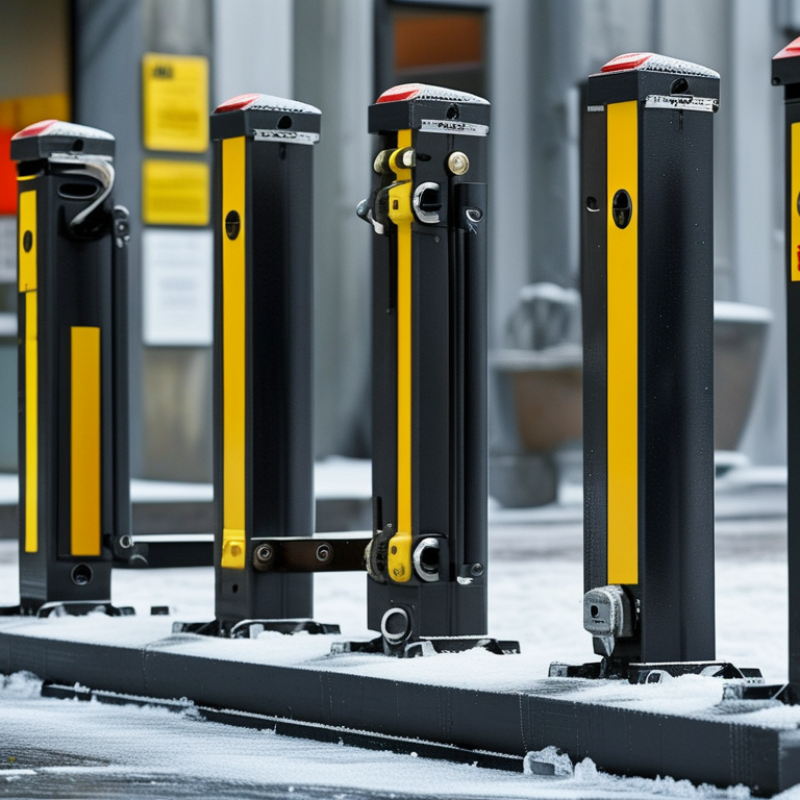
Top Hydraulic Bollards for Global Buyers
Hydraulic Bollards: Definition, Purpose, and Core Operating Principles
Hydraulic bollards are retractable steel posts used to manage vehicle access. They rise from the ground and create a controlled physical barrier. Unlike fixed posts, they can lower when authorized vehicles need passage. Their purpose includes perimeter protection, traffic separation, and controlled entry at sensitive sites.
A hydraulic power unit pumps fluid into a cylinder beneath each bollard. Pressure extends the cylinder and lifts the post. Releasing pressure allows the post to descend through a controlled valve system. Sensors confirm whether the bollard is fully raised or lowered. A control cabinet can connect with card readers, traffic lights, intercoms, and safety loops.
Small details matter.
During site assessment, installers check soil strength, drainage, road width, and underground utilities. Poor drainage can contaminate hydraulic components and slow movement. A shallow foundation may also reduce stability. That assumption often fails in wet or heavily trafficked areas. Good designs include warning lights, audible signals, emergency lowering, and visible safety zones. These features support safer operation, but they do not replace trained supervision. Maintenance teams should inspect seals, fluid levels, sensors, and impact damage at scheduled intervals. No system is perfect. Temperature changes, power loss, and careless installation can still affect performance.
Hydraulic bollards serve different security applications, and selection should begin with site risk, not appearance. Automatic retractable bollards suit controlled entrances, loading zones, and public buildings requiring scheduled vehicle access. They rise from the pavement within seconds, then lower for authorized vehicles. Fixed hydraulic units provide stronger, continuous protection at sensitive perimeters. Removable or semi-automatic designs may fit low-frequency access points, though daily handling can become inconvenient.
Deep-mount systems usually offer better structural stability, but shallow-mount models help where underground utilities restrict excavation. Check drainage carefully. Water, grit, and freezing conditions can reduce hydraulic reliability. ASTM F2656/F2656M-23 evaluates vehicle impact resistance through vehicle mass, speed, and penetration distance. IWA 14-1:2013 uses similar impact-testing principles. A rating alone is not enough; foundation design and installation quality also matter. A 2024 MarketsandMarkets report valued the broader physical security market at approximately USD 127 billion in 2023, with continued growth forecast through 2028. That growth reflects demand for integrated access control, not a universal need for heavy barriers. My practical concern is simple: some buyers specify the highest rating, then overlook emergency access, maintenance space, or pedestrian safety. Performance must match the location. Test records, cycle data, hydraulic protection, and local engineering review should support every purchasing decision.
| Hydraulic Bollard Type | Typical Security Application | Security Rating or Use Level | Typical Raised Height | Typical Diameter | Approximate Raising Time | Traffic Frequency | Recommended Installation Environment | Main Advantages | Key Buyer Considerations |
|---|---|---|---|---|---|---|---|---|---|
| High-Security Fixed Hydraulic Bollard | Government facilities, embassies, military sites, financial centers, critical infrastructure, and restricted industrial entrances | High security Vehicle impact resistance should be verified through an applicable crash-test standard | 600–900 mm | 219–324 mm | 3–8 seconds | Medium to high | Vehicle entrances requiring strong perimeter protection and controlled access | Robust construction, strong visual deterrence, and effective protection against unauthorized vehicle intrusion | Check certified impact performance, foundation depth, drainage design, hydraulic power-unit protection, and emergency lowering provisions |
| Automatic Rising Hydraulic Bollard | Corporate campuses, commercial buildings, hotels, residential developments, logistics facilities, and controlled parking areas | Medium to high security Suitable when vehicle access must be controlled frequently | 450–800 mm | 168–273 mm | 3–6 seconds | High | Sites with access-control systems such as RFID, card readers, keypads, intercoms, or automatic number-plate recognition | Supports automated access control, repeatable operation, and integration with gates, barriers, and security management systems | Confirm cycle capacity, controller compatibility, loop-detector placement, safety sensors, and power-failure operation |
| Semi-Automatic Hydraulic Bollard | Private driveways, small commercial sites, residential parking areas, pedestrian streets, and low-volume service entrances | Low to medium security Primarily intended for access management rather than certified crash protection | 450–600 mm | 168–219 mm | Manual release or assisted operation | Low to medium | Locations where occasional vehicle access is required and full automation is not economically necessary | Lower system complexity, reduced electrical requirements, and simpler maintenance | Evaluate operating effort, locking method, weather protection, user safety, and whether the product is suitable for frequent cycles |
| Removable Hydraulic Bollard | Temporary event security, seasonal pedestrian zones, emergency access routes, construction areas, and flexible site layouts | Temporary access control Security performance depends on the locking base and installation arrangement | 500–900 mm | 168–273 mm | Manual or assisted removal | Low | Sites requiring occasional opening, relocation, or complete removal of vehicle-control equipment | Flexible deployment, easier maintenance access, and reduced permanent obstruction | Consider storage requirements, removal weight, locking security, socket drainage, and resistance to unauthorized extraction |
| Retractable Hydraulic Bollard | City-center streets, pedestrian plazas, historic districts, shopping areas, public squares, and emergency vehicle access points | Medium to high security Can provide controlled access while preserving the appearance of public areas | 500–800 mm | 168–273 mm | 3–8 seconds | Medium to high | Urban environments where bollards must remain visually discreet when lowered | Improves streetscape appearance, supports scheduled access, and provides clear physical separation between vehicles and pedestrians | Review drainage, underground utilities, frost protection, maintenance access, pedestrian visibility, and emergency override arrangements |
| Shallow-Mount Hydraulic Bollard | Existing streets, parking structures, renovated plazas, areas with shallow utilities, and sites with restricted excavation depth | Medium security Final protection level depends on the tested system and foundation design | 450–600 mm | 168–273 mm | 3–8 seconds | Medium | Locations where standard deep excavation is limited by utilities, rock, groundwater, or structural constraints | Reduced excavation requirements and easier adaptation to constrained sites | Verify certified impact performance, structural anchoring, drainage capacity, available installation depth, and local soil conditions |
| Hydraulic Bollard with Integrated LED Lighting | Pedestrian zones, parking entrances, campuses, hotels, public venues, and access points with limited nighttime visibility | Access control and visibility Lighting improves visibility but does not replace physical impact certification | 450–800 mm | 168–273 mm | 3–8 seconds | Medium to high | Areas requiring clear indication of bollard position during darkness, rain, fog, or heavy pedestrian movement | Enhances nighttime visibility, helps reduce contact incidents, and provides clear raised or lowered status indication | Check LED visibility angle, IP protection, replacement access, power demand, glare control, and compatibility with the control cabinet |
| Hydraulic Bollard for Emergency Access | Fire lanes, hospitals, airports, utility compounds, industrial sites, and emergency-service routes | Controlled emergency access Designed for rapid authorized opening and reliable fail-safe operation | 500–800 mm | 168–273 mm | 2–5 seconds | Medium | Entrances where emergency vehicles require dependable, unobstructed access under abnormal operating conditions | Fast authorized release, clear access status, and integration with emergency switches or fire-alarm systems | Define the required fail-safe mode, emergency power source, manual override, response time, signage, and coordination with local fire authorities |
| Heavy-Duty Hydraulic Bollard for Industrial Traffic | Ports, warehouses, distribution centers, factories, loading yards, utility facilities, and high-frequency vehicle entrances | High-duty operation Selected for repeated cycles and demanding commercial traffic conditions | 600–900 mm | 219–324 mm | 3–8 seconds | High | Industrial sites exposed to trucks, dust, vibration, rain, and continuous access-control activity | High cycle capability, strong structural design, and suitability for demanding vehicle-management routines | Confirm duty cycle, truck-clearance requirements, hydraulic component quality, corrosion protection, service intervals, and spare-parts availability |
Top hydraulic bollards for global buyers should be judged by tested performance, not appearance. ASTM F2656/F2656M-23 evaluates vehicle impact speed, vehicle mass, and penetration distance. Buyers should request the complete test classification, not a vague “crash-rated” claim. ISO 22343-1:2023 also supports consistent hostile-vehicle mitigation testing and reporting. These references help compare equipment across regions.
Safety continues after impact. A hydraulic system should include controlled raising, emergency lowering, obstruction detection, and a manual release when power fails. The cabinet needs suitable ingress protection, while drainage must prevent water pooling around the cylinder. Corrosion-resistant steel, sealed hydraulic lines, and temperature-rated fluids matter in coastal or cold environments. Small details often decide service life.
Experience from site commissioning shows that foundations are frequently underestimated. Soil strength, drainage, vehicle approach angles, and pedestrian visibility must be checked together. NPSA guidance on hostile vehicle mitigation also emphasizes site-specific assessment rather than isolated equipment selection. Ask for cycle-test records, maintenance intervals, spare-part availability, and independent impact documentation. Do not accept only computer simulations.
A practical concern remains. More steel does not always mean safer operation. Poor lighting, slow reset times, or an exposed control cabinet can weaken a well-tested barrier. Buyers should inspect a working installation, measure raising and lowering times, and review failure procedures with local operators before approval.
Hydraulic bollards require careful planning before delivery. Site surveys should record pavement depth, drainage paths, utility lines, and vehicle access. A reinforced foundation helps resist repeated impacts. Poor drainage remains a frequent installation problem. Water can collect around the hydraulic chamber and accelerate corrosion. Installers should provide safe access for inspection and emergency servicing.
Maintenance begins with a clear inspection schedule. Check seals, hydraulic lines, hinges, warning lights, and rising speed. Keep the chamber clean and remove sand after heavy rain. Hydraulic fluid levels need checking according to the manufacturer’s technical instructions. Record every inspection, repair, and unusual noise. Small leaks matter. They can become expensive failures. In my experience, maintenance plans often look complete but ignore seasonal flooding and road salt.
Compliance must be verified locally, not assumed from a sales brochure. Buyers should confirm impact ratings, electrical protection, visibility requirements, accessibility rules, and emergency lowering procedures with qualified engineers. Fire and emergency access must remain practical during power loss. Independent testing documents can support procurement decisions, but they do not replace local approval. Specifications may change after installation. That possibility deserves honest review. A bollard that performs well in a dry warehouse may need different protection beside a coastal road. Calibration, signage, and user training also influence real-world safety.
For global buyers, supplier evaluation should begin with evidence, not polished photographs. A credible supplier should provide hydraulic schematics, duty-cycle results, corrosion specifications, and independently witnessed crash-test documentation. ASTM F2656/F2656M and IWA 14-1 classify vehicle impact performance, but they do not prove every installation will perform identically. Foundation depth, soil conditions, drainage, and vehicle approach speed still matter. Look beyond purchase price. That matters.
The 2024 Grand View Research outlook places the global physical security market above USD 120 billion, with continued growth driven by infrastructure protection and access control investment. This expansion increases supplier choice, but also makes comparison harder. Request a five-year total-cost model covering excavation, hydraulic oil, electrical work, inspections, replacement seals, and emergency response. A cheaper unit may require costly civil work. A longer warranty means little without local spare parts and trained technicians. Buyers should also compare cycle times, such as six-second deployment versus twelve seconds, against the site’s traffic volume.
Long-term value depends on maintainability. Ask for documented mean time between failures, service intervals, factory acceptance testing, and site acceptance records. Require clear responsibility for drainage and winter protection. In field procurement, one recurring mistake is trusting a headline rating while ignoring maintenance access. The rating looks impressive. The service plan is often weak. A practical evaluation should score supplier transparency, technical support, lifecycle cost, and verified performance separately, rather than letting the lowest quotation decide.
A practical procurement model for comparing hydraulic bollard suppliers. The percentage values represent recommended evaluation weights rather than company or brand performance data.
Long-term value should be assessed alongside purchase price. Impact resistance and compliance protect site security, while lifecycle cost, warranty coverage, service capability, corrosion protection, and spare-parts availability reduce ownership risk.
: Check verified impact performance, vehicle mass, impact speed, and penetration distance. Do not trust appearance. Request complete test documents.
The foundation must match soil strength, pavement depth, drainage, and vehicle approach angles. Weak foundations can fail. Plan civil work carefully.
Look for controlled raising, emergency lowering, obstruction detection, and manual release during power failure. These features protect people and vehicles.
Provide drainage around the hydraulic chamber. Prevent standing water after rain. Use sealed lines, corrosion-resistant materials, and suitable fluids.
Inspect seals, hydraulic lines, hinges, warning lights, and movement speed regularly. Remove sand after heavy rain. Record leaks, repairs, and unusual noises.
Qualified engineers should verify electrical protection, visibility, accessibility, impact performance, and emergency procedures. A brochure is not approval. Local conditions may change the specification.
Request hydraulic diagrams, cycle-test records, corrosion details, independent impact evidence, and service information. Compare five-year costs, not only purchase prices.
Long-term value depends on maintenance access, spare parts, trained technicians, service intervals, and failure records. A strong rating can still disappoint. The service plan may be weak.
Yes. Measure raising and lowering times, inspect drainage, and review failure procedures with local operators. Photographs are not enough. I would still question incomplete records.
Hydraulic Bollards are robust security devices designed to control vehicle access while preserving pedestrian movement and site visibility. Using hydraulic power to raise and lower reinforced posts, they can protect entrances, commercial properties, public spaces, industrial facilities, and other sensitive areas. Common configurations include fixed, automatic rising, retractable, shallow-mount, and heavy-duty models, allowing buyers to match the bollard type with traffic volume, threat level, space limitations, and operational requirements.
For global buyers, selection should focus on impact resistance, lifting speed, duty cycle, emergency operation, drainage, visibility, safety sensors, and compatibility with access-control systems. Proper installation requires structural planning, suitable foundations, reliable power, and effective water management. Regular inspections, cleaning, hydraulic checks, and preventive maintenance help ensure long-term performance. Buyers should also review relevant safety and construction requirements in the destination market, compare total ownership costs rather than purchase price alone, and evaluate supplier experience, documentation, warranty support, spare-parts availability, customization capability, and after-sales service.

KAVASS